Quick facts
- Width
- 12,742 kmlargest of the four rocky planets
- Surface gravity
- 9.8 m/s²the standard everything else is compared with
- Length of a day
- 24 hoursone spin takes 23 h 56 min
- Length of a year
- 365.25 dayshence a leap day every four years
- Distance from the Sun
- 147 to 152 million kmsunlight takes about 8 min 20 s
- Axial tilt
- 23.4°the reason for the seasons
- Average temperature
- about 15 °Cabout 1.3 °C warmer than before industry
- Air
- 78% nitrogen, 21% oxygenplus argon, water vapour and CO₂
- Surface covered by ocean
- about 71%average depth about 3.7 km
- Highest and lowest points
- 8,849 m and −10,935 mEverest and the Challenger Deep
- Moons
- 1unusually large for its planet
- Age
- about 4.54 billion yearslife appears within the first billion
Earth at a glance
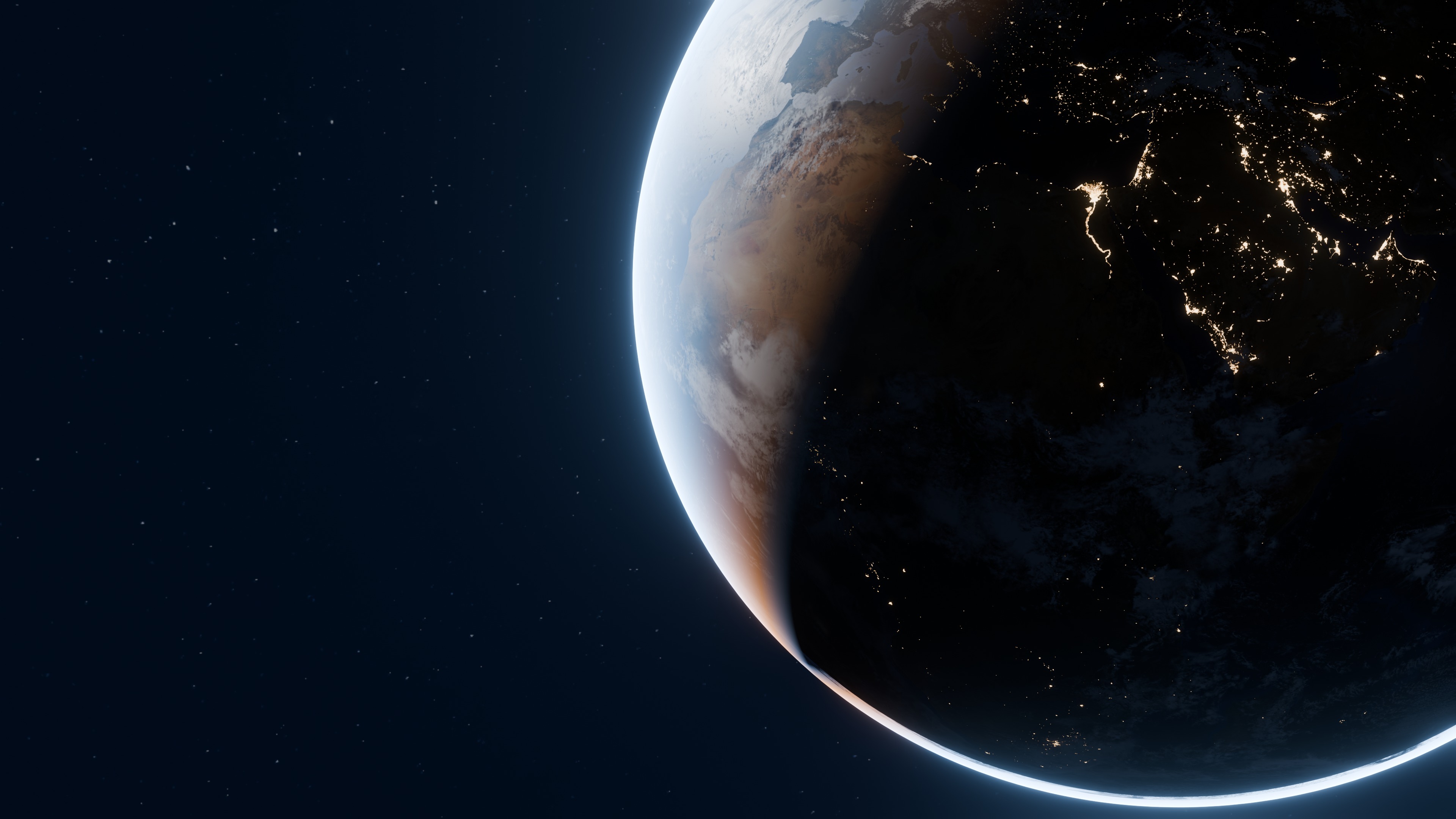
Earth is the third planet from the Sun and the largest and densest of the four rocky planets. It is the only world known to have liquid water on its surface, plate tectonics that keep recycling its crust, and life.
Seen from space it is mostly blue, because oceans cover about 71% of the surface. White swirls of cloud cover around two thirds of the planet at any moment, and at night the continents trace themselves in city lights.
Its distance from the Sun is part of the luck: close enough that water does not stay frozen, far enough that it does not boil away. That zone around a star where liquid water can last on a planet's surface is often called the habitable zone.
Inside Earth
Under our feet, the crust is only about 5 to 70 kilometres thick, thinnest under the oceans and thickest under big mountain ranges. Below it is the mantle, nearly 2,900 kilometres of hot rock that is solid but creeps slowly over millions of years.
At the centre is an iron and nickel core. The outer core is liquid, and its churning metal generates Earth's magnetic field. The inner core is a solid ball about 1,220 kilometres in radius, as hot as the surface of the Sun but kept solid by enormous pressure.
The magnetic field reaches far out into space and deflects most of the solar wind, a stream of charged particles from the Sun. Without that shield, Earth could have slowly lost much of its air and water, as Mars did.
A planet that moves
Earth's outer shell is broken into large plates that drift a few centimetres a year, about as fast as fingernails grow. Where they pull apart, new ocean floor forms. Where they collide, mountains rise and one plate can slide beneath another.
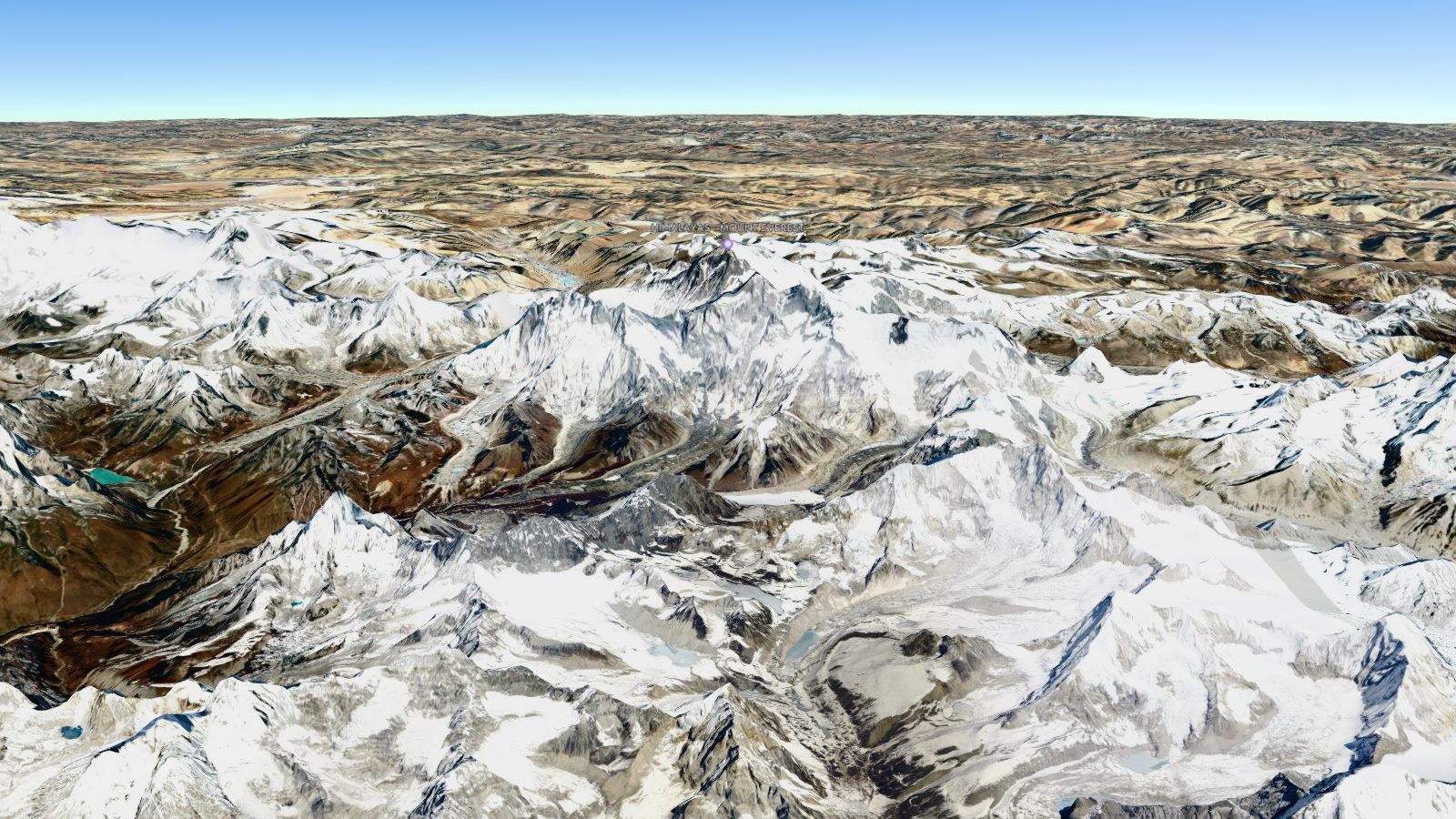
The Himalayas are still growing as India pushes into Asia. Iceland sits right on the Mid-Atlantic Ridge, where North America and Europe are separating, so you can walk between the two plates. Mount Fuji is one of the volcanoes fed by plates diving beneath Japan.
Moving plates cause earthquakes and eruptions, but they also recycle carbon between the air, the oceans and the rocks over millions of years. That slow cycle is one of the reasons Earth's climate has stayed mild enough for life for so long.
Water and ice
Almost all of Earth's water, about 97%, is salty ocean. Most fresh water is locked in ice, above all in the ice sheets of Antarctica and Greenland, which is covered by ice up to about 3 kilometres thick.
Water moves constantly between sea, sky and land. It evaporates, forms clouds, falls as rain and snow and runs back to the sea along rivers such as the Nile, one of the longest on Earth. The oceans also carry heat from the tropics towards the poles, shaping weather around the world.
Where the water came from is still debated. Some may have been in the rocks that built Earth, and some delivered later by asteroids and perhaps comets.
Air, weather and climate
Earth's atmosphere is mostly nitrogen and oxygen, and it is thin. Half of all the air lies below about 5.5 kilometres, roughly the height of the highest Himalayan base camps. The Kármán line, 100 kilometres up, is where space is usually said to begin.
Weather happens in the lowest layer, the troposphere. Above it the stratosphere holds the ozone layer, which absorbs most of the Sun's harmful ultraviolet light.
Gases such as water vapour and carbon dioxide trap some of the heat Earth would otherwise radiate to space. That natural greenhouse effect keeps the average temperature around 15 °C instead of well below freezing. Since the Industrial Revolution, burning fossil fuels has raised carbon dioxide from about 280 parts per million to around 430, and the planet has warmed by about 1.3 °C, almost all of it caused by people.
Life
Life appeared early. Fossil traces of microbial mats called stromatolites are about 3.5 billion years old, and chemical hints may go back further. For most of Earth's history, life was single celled.
Around 2.4 billion years ago, microbes that used sunlight to make food had released enough oxygen to change the air, an event called the Great Oxidation. Complex animals appeared much later, around 600 million years ago, and land plants after that.
Life has reshaped the planet in return. Forests such as the Amazon help make rain and store huge amounts of carbon. Coral built the Great Barrier Reef, the largest structure made by living things, visible from space. Mangroves like the Sundarbans protect coasts from storms.
Canada from above
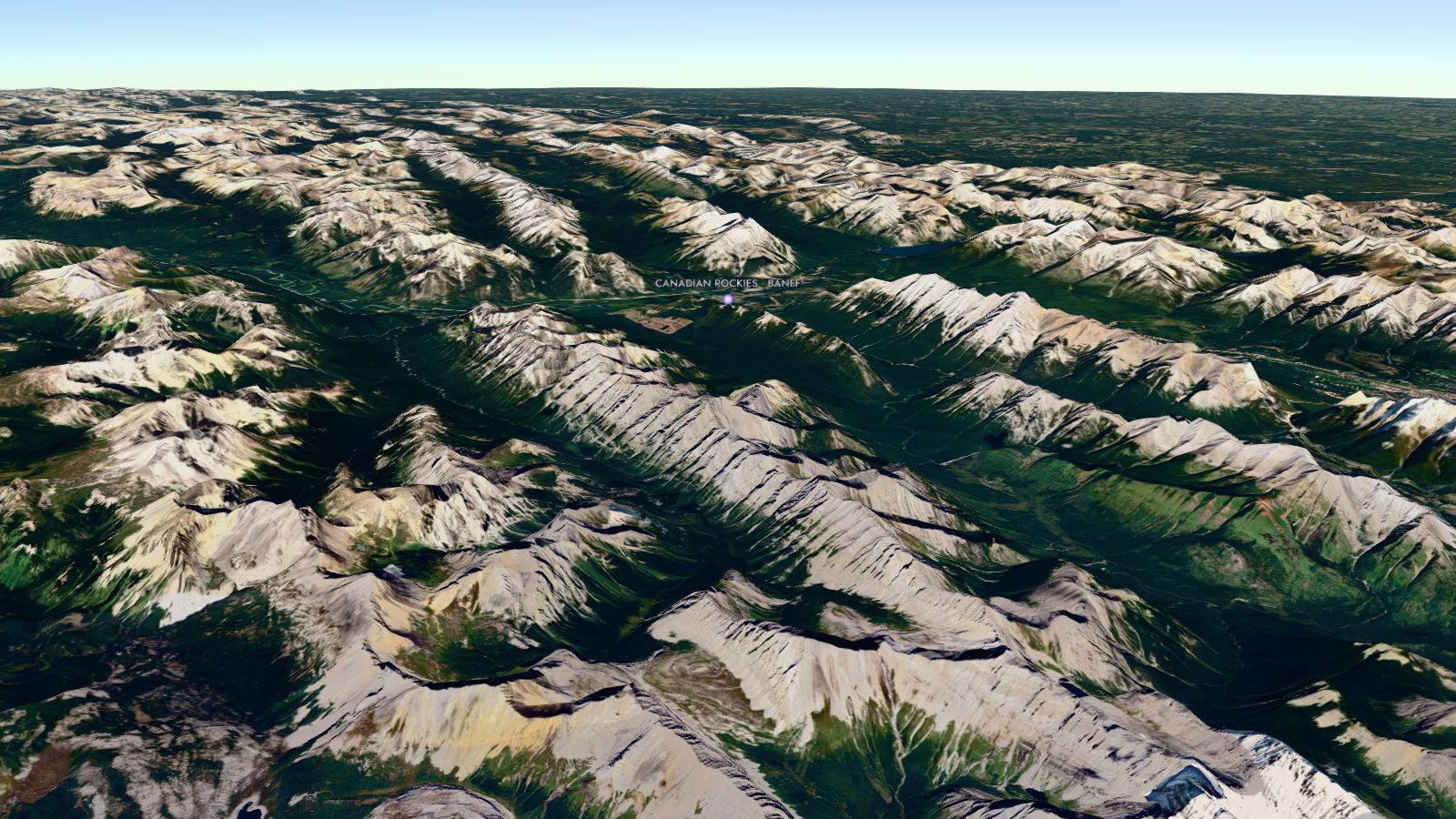
Starfall was made in Calgary, so the explorer starts close to home. From Calgary, the prairie runs straight into the Canadian Rockies, mountains pushed up by plate collisions between about 80 and 55 million years ago and then carved by glaciers.
Far to the north, Yellowknife sits under the auroral oval, where the northern lights appear on many clear winter nights. They are made when particles from the Sun, guided by Earth's magnetic field, strike the upper atmosphere about 100 to 300 kilometres up.
In the east, Niagara Falls carries the outflow of the upper Great Lakes, and the Bay of Fundy has the highest tides in the world, rising and falling by up to about 16 metres twice a day.
Earth from space
The International Space Station orbits about 400 kilometres up, circling the planet about every 90 minutes, so its crew sees around sixteen sunrises and sunsets a day. People have lived on board without a break since November 2000. In the explorer you can ride alongside it on its real, current orbit.
More than a thousand satellites watch Earth every day, measuring sea level, ice, crops, fires, air quality and storms. Much of what we know about the climate comes from this view from above.
Some photos changed how people saw the planet. Earthrise, taken from Apollo 8 in 1968, showed Earth rising over the Moon. The Blue Marble, from Apollo 17 in 1972, showed the whole sunlit globe. And in 1990 Voyager 1, about 6 billion kilometres away, looked back and saw Earth as a single pale blue dot.
Earth and the Moon
Earth's Moon is unusually large compared with its planet. It probably formed from debris thrown out when a Mars sized body hit the young Earth. Its gravity drives the tides and helps steady the tilt of Earth's axis, keeping the seasons fairly regular over long periods. The Moon has its own page in this encyclopedia.
Open questions
How exactly did life begin, and did it start in deep sea vents, in warm ponds on land, or somewhere else?
Where did Earth's water come from, and how much is still stored deep in the mantle?
When did plate tectonics begin, and how unusual is it among rocky planets?
And how fast will the climate keep changing, and how much of that is still in our hands?
Missions
Milestones in seeing our own planet from above. Launch sites you can fly to in the explorer are linked.
- 1946V-2 rocket photo United States
A camera on a captured rocket took the first photo of Earth from space, from about 105 kilometres up.
- 1957Sputnik 1 Soviet Union
The first artificial satellite, launched from Baikonur. Fly to the launch site
- 1961Vostok 1 Soviet Union
Yuri Gagarin becomes the first person to orbit Earth. Fly to the launch site
- 1968Apollo 8 NASA
The Earthrise photo, taken by Bill Anders from lunar orbit. Fly to the launch site
- 1972Apollo 17 and Landsat 1 NASA
The Blue Marble photo, and the first of the Landsat satellites that have watched Earth's land ever since.
- 1990Pale Blue Dot NASA
Voyager 1 photographs Earth from about 6 billion kilometres away.
- 2000International Space Station NASA, Roscosmos, ESA, JAXA and CSA
The first long term crew arrives, and people have lived in orbit continuously ever since.
- 2015DSCOVR NASA and NOAA
Its EPIC camera, a million and a half kilometres away, photographs the whole sunlit Earth several times a day.
Fly there yourself
Every place on this page is real terrain in Starfall's 3D explorer. Pick one and the camera flies you there, with narration when you arrive.
Himalayas · Mount EverestThe highest mountain on Earth, still rising.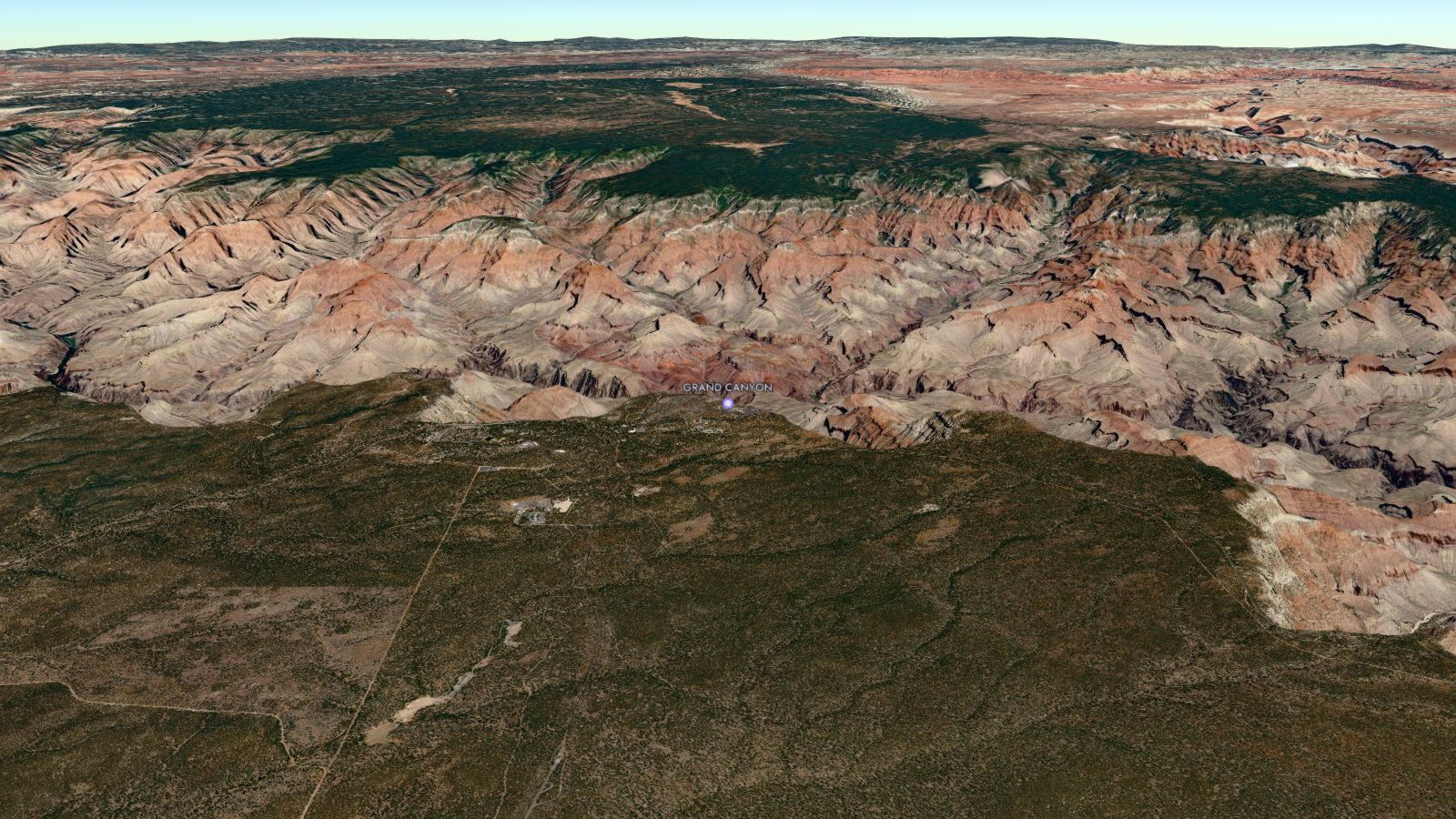 Grand CanyonNearly two billion years of rock layers, cut by one river.Canadian Rockies · BanffCalgary's mountains, carved by glaciers.
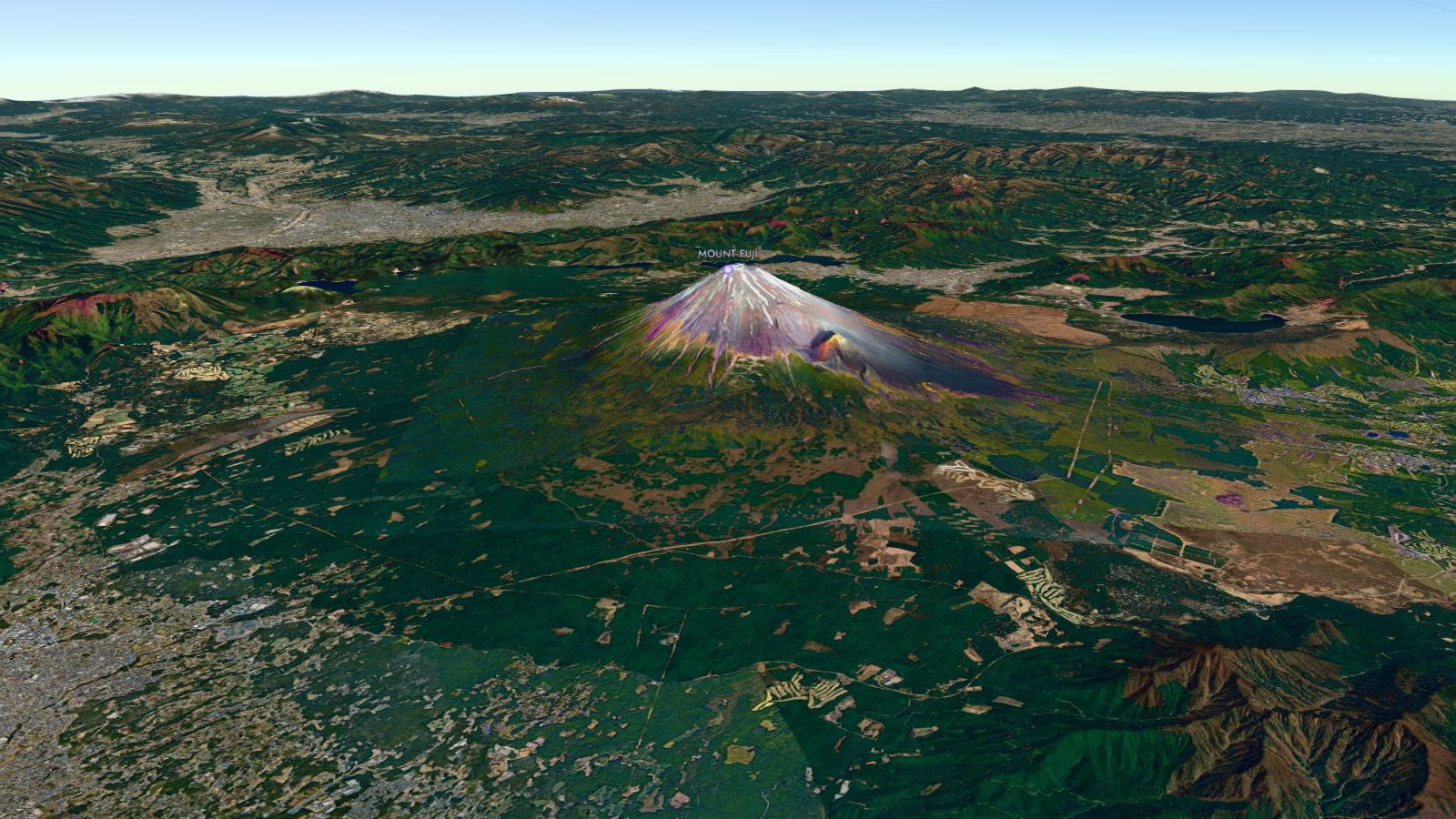 Mount FujiJapan's tallest volcano.
All places on Earth
- Calgary
- Canadian Rockies · Banff
- Yellowknife · northern lights
- Niagara Falls
- Bay of Fundy
- Vancouver
- Victoria
- Edmonton
- Saskatoon
- Winnipeg
- Sault Ste. Marie
- Toronto
- Ottawa
- Montreal
- Quebec City
- Halifax
- St. John's
- Dhaka
- Padma Bridge
- Cox's Bazar beach
- Srimangal tea gardens
- Chattogram
- Bengal Delta
- Himalayas · Mount Everest
- Grand Canyon
- Mount Fuji
- Iceland
- Greenland ice sheet
- Sahara
- The Nile
- Amazon rainforest
- Sundarbans
- Great Barrier Reef
- Tokyo
- New York
- Kennedy Space Center
- Baikonur Cosmodrome
- Kourou · Europe's spaceport
Sources
- NASA Earth Fact Sheet (NSSDC)
- NASA Science: Earth
- USGS: Earth's water
- NOAA Climate.gov: Atmospheric carbon dioxide
- NOAA: Mauna Loa CO₂ trends
- NASA: International Space Station
Facts were checked against these sources by a separate review before publishing. Spotted something out of date? Space moves fast, and this page is updated as missions report back.